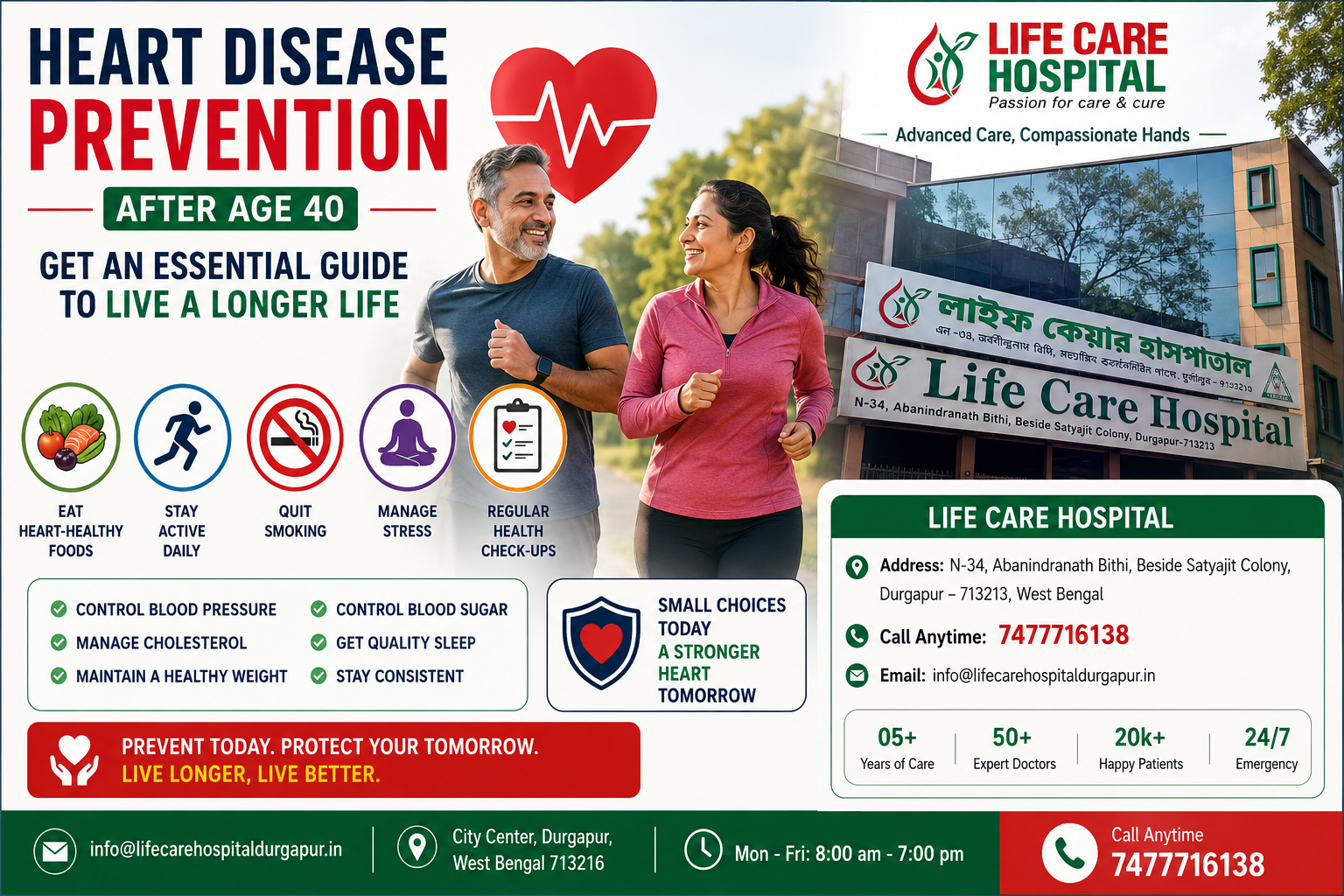








Heart Disease Prevention After Age 40: A Guide from The Best Cardiologist in Durgapur
Heart Disease Prevention After Age 40: A Guide from The Best Cardiologist in Durgapur
Keep reading to learn what our best cardiologist in Durgapur recommends.
Reaching age 40 is a milestone worth celebrating, but it also marks a critical shift in your heart health. Research shows that cardiovascular disease risk jumps dramatically after 40, with the American Heart Association reporting that about 40% of men and women develop cardiovascular disease between ages 40-59. Midlife is when prevention has the greatest impact—identifying and managing risk factors like hypertension or high cholesterol in your 40s can significantly reduce the likelihood of heart attack, stroke, and heart failure later on.
Understand Why Your 40s Are Critical
Your heart undergoes natural changes as you age. Blood vessels gradually become less flexible, cholesterol tends to accumulate more easily, and metabolism slows down. These changes don’t guarantee heart disease, but they do mean you need to be more intentional about prevention now than in your younger years. The good news? Simple lifestyle changes can dramatically reduce your risk. Read on to discover the advice of our best cardiologist in Durgapur.
Eat a Heart-Healthy Diet
Your diet is your most powerful tool for heart disease prevention. Focus on a low-fat, high-fiber diet that includes plenty of fresh fruits and vegetables (aim for 5 portions daily) and whole grains.
Key dietary strategies:
- Limit salt to no more than 6g (about 1 teaspoon) per day to prevent high blood pressure.
- Avoid foods that increase bad cholesterol levels, containing saturated fats.
- Eat foods high in fiber while limiting saturated fat, trans fat, and cholesterol.
- Include fish (preferably oily fish) at least twice weekly, plus nuts and fiber-rich whole grains.
- Cut down sugar intake to prevent diabetes. Diabetes significantly increases heart disease risk.
Move Your Body Daily
Physical activity is non-negotiable for heart health after 40. The Surgeon General recommends 2 hours and 30 minutes of moderate-intensity exercise weekly, like brisk walking or bicycling. However, aim for 30 to 60 minutes of activity daily for optimal results.
Easy ways to stay active:
- Walk briskly during lunch breaks
- Take the stairs instead of elevators
- Start light strength training 2-3 times weekly
- Try stretching or yoga in the morning
- Bike or walk for short errands instead of driving
Even modest increases in daily movement improve heart health, especially when paired with medical guidance.
Maintain a Healthy Weight
Healthy weight is necessary to reduce your chances of developing high blood pressure. Combining a healthy diet with regular exercise is the best way to maintain it. Pay attention to both body weight and waist circumference, as these are linked to heart risk.
Quit Smoking and Limit Alcohol
If you smoke, it’s high time to give up completely! No smoking will reduce your risk of developing coronary heart disease significantly. Cigarette smoking greatly increases your risk for heart disease, and quitting lowers it.
For alcohol, men and women should not regularly drink more than 14 units per week. Binge drinking is poison to your heart. It increases the risk of a heart attack. Drinking it occasionally only may help prevent high blood pressure.
Monitor Your Health Numbers
High blood pressure usually has no symptoms, so check it regularly. Your target blood pressure should be below 135/85mmHg. Common heart-related screenings include:
- Blood pressure checks (at least annually if normal, more often if diagnosed)
- Cholesterol testing every 4-6 years, or more frequently if you have high cholesterol or family history
- Blood glucose screening for diabetes and prediabetes
- Body weight and waist circumference measurements
Track your heart health numbers. Stay informed. Make vital changes for your heart.
Manage Stress and Sleep
Stress affects blood pressure and inflammation, making management crucial. Improve your sleep quality. Overlooking it may contribute to cardiovascular risk. Both stress management and quality sleep are essential components of heart disease prevention.
Take Medication When Needed
If you have high cholesterol, high blood pressure, or diabetes, follow your doctor’s instructions carefully for prescribed medicine. Never stop taking medicine unless your doctor tells you. Lifestyle changes combined with medication when necessary provide the best protection. Want to get a treatment? Receive world-class heart care at the best cardiology hospital in Durgapur, Life Care Hospital.
Start Today, Not Tomorrow
The most important step is starting now. Even small changes in lifestyle can improve heart health when paired with medical guidance. Identify your risk factors, make one positive change this week, and build from there. Your heart in your 50s, 60s, and beyond depends on the choices you make in your 40s.
Heart disease prevention after 40 isn’t about dramatic transformations—it’s about consistent, sustainable habits that protect your heart for life. Your future self will thank you for starting today. Contact us at Life Care Hospital and treat your heart condition with advanced care from the best cardiologist in Durgapur.